Cherokee Garden
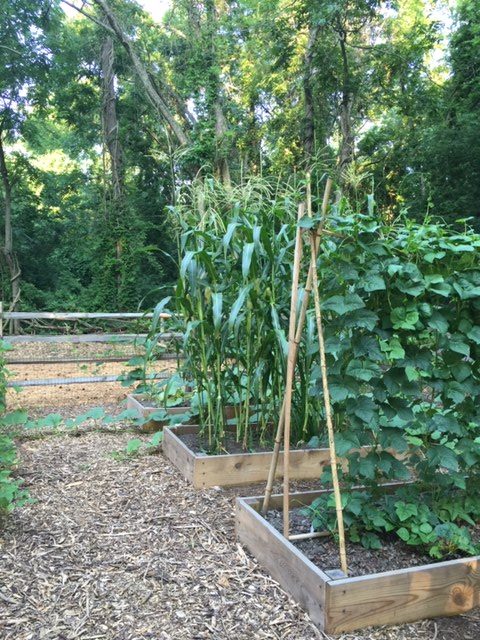
The Cherokee Garden has been curated by Master Gardeners with original plants that were used by the Cherokee Indians for food, medicines, tools, weapons, and shelter. Over 400 plants have been identified. Individual black plant signs contain a QR code that takes visitors directly to the website that displays more information and pictures.
The Cherokee heirloom vegetables, cultivated by the Cherokee prior to 1838, are featured behind the split rail fencing. This Cherokee Garden at Green Meadows Preserve was a Georgia Native Plant Society restoration project and is a designated “Interpretive Site” on the Trail of Tears National Historic Trail.




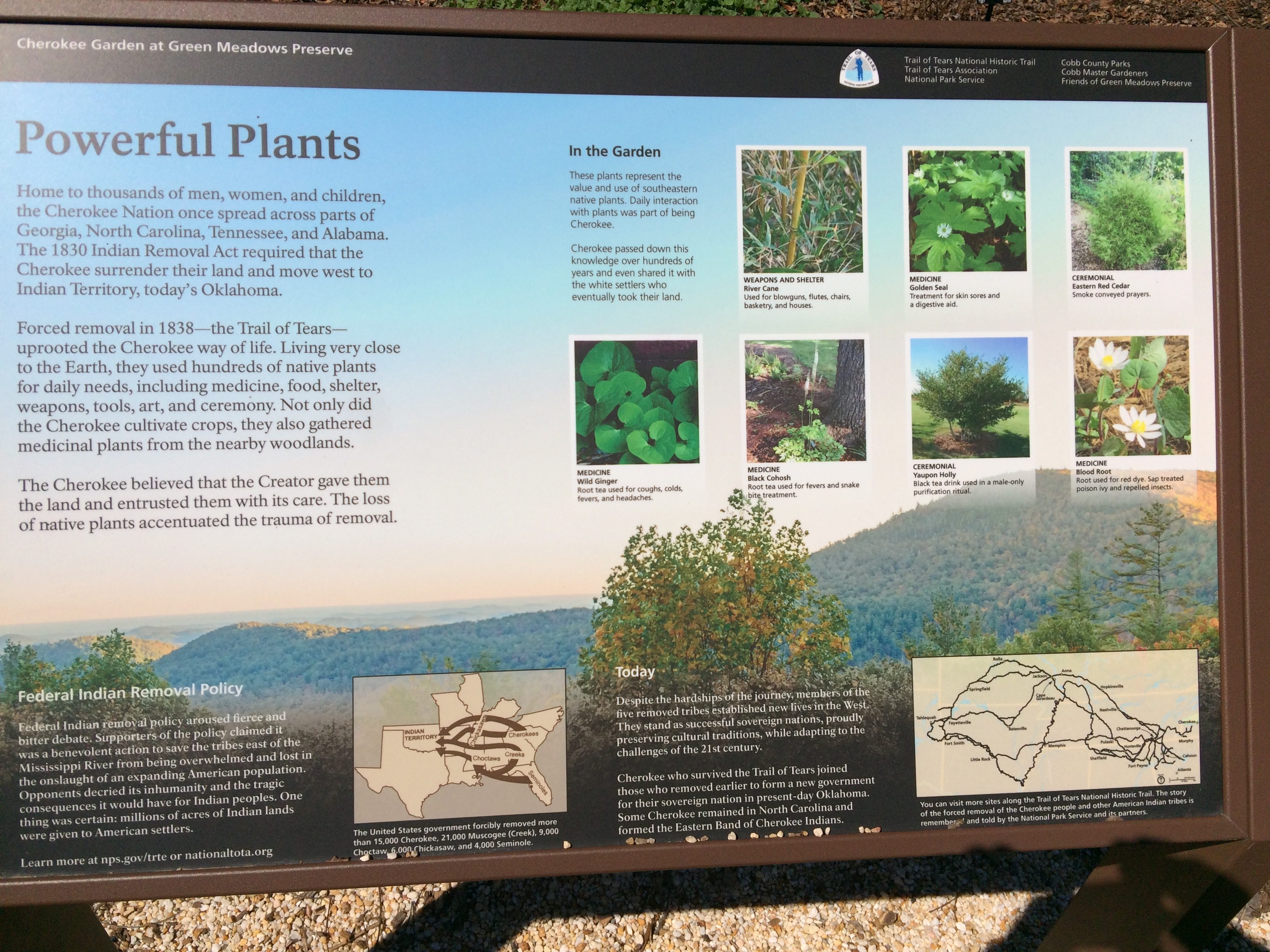
In the Garden
The following plants represent the value and use of southeastern native plants. Daily interaction with plants was part of being Cherokee
Cherokee passed down this knowledge over hundreds of years and even shared it with the white settlers who eventually took their land.
WEAPONS AND SHELTER
River Cane
Used for blowguns, flutes, chairs, basketry, and houses.
MEDICINE
Golden Seal
Treatment for skin sores and a digestive aid.
CEREMONIAL
Eastern Red Cedar
Smoke conveyed prayers.
MEDICINE
Wild Ginger
Root tea used for coughs, colds, fevers, and headaches.
MEDICINE
Black Cohosh
Root tea used for fevers and snake bite treatment.
CEREMONIAL
Yaupon Holly
Black tea drink used in a male-only purification ritual.
MEDICINE
Blood Root
Root used for red dye. Sap treated poison ivy and repelled insects.

Cherokee Trail of Tears
The National Park Service has designated Green Meadows as a historical and educational Interpretive Site on the Trail of Tears National Historic Trail. The Cherokee lived in this area for hundreds of years and were forcibly relocated to Indian Territory west of the Mississippi following the Indian Removal Act of 1830. The Cherokee Garden (above) highlights the Cherokee historical and educational effort at Green Meadows.
Georgia Chapter of the Trail of Tears Association
National Trail of Tears Association Website
National Park Service – Trail of Tears
Home to thousands of men, women, and children, the Cherokee Nation once spread across parts of Georgia, North Carolina, Tennessee, and Alabama. The 1830 Indian Removal Act required that the Cherokee surrender their land and move west to Indian Territory, today’s Oklahoma.
Forced removal in 1838-the Trail of Tears— uprooted the Cherokee way of life. Living very close to the Earth, they used hundreds of native plants for daily needs, including medicine, food, shelter, weapons, tools, art, and ceremony. Not only did the Cherokee cultivate crops, they also gathered medicinal plants from the nearby woodlands.
The Cherokee believed that the Creator gave them the land and entrusted them with its care. The loss of native plants accentuated the trauma of removal.
Federal Indian removal policy aroused fierce and bitter debate. Supporters of the policy claimed it was a benevolent action to save the tribes east of the Mississippi River from being overwhelmed and lost in the onslaught of an expanding American population.
Opponents decried its inhumanity and the tragic consequences it would have for Indian peoples. One thing was certain: millions of acres of Indian lands were given to American settlers.
Learn more at nps.gov/trte or nationaltota.org
The United States government forcibly removed more than 15,000 Cherokee, 21,000 Muscogee (Creek), 9,000 Choctaw, 6.000 Chickasaw, and 4,000 Seminole.
Despite the hardships of the journey, members of the five removed tribes established new lives in the West. They stand as successful sovereign nations, proudly preserving cultural traditions, while adapting to the challenges of the 21st century.
Cherokee who survived the Trail of Tears joined those who removed earlier to form a new government for their sovereign nation in present-day Oklahoma. Some Cherokee remained in North Carolina and formed the Eastern Band of Cherokee Indians.
You can visit more sites along the Trail of Tears National Historic Trail. The story of the forced removal of the Cherokee people and other American Indian tribes is remembered and told by the National Park Service and its partners.